
10 screen-free games that promote communication for children on the spectrum
Communication is a key skill in everyday life, and it's especially important for children on the autism spectrum. Games are a great tool for developing these skills, especially screen-free games that allow direct interaction, strengthen social connections and build understanding of emotions. In this article we present ten simple, fun and effective games that promote communication in children on the spectrum, focusing on developing language, social understanding and the ability to cooperate.

Why is it important to play without screens?
Screens can be a distraction and sometimes make it harder to make eye contact and understand facial expressions and body language. Screen-free games encourage verbal and nonverbal communication, allow shared experiences and strengthen the connection between the child and those around them. They also contribute to developing social skills such as patience, listening, taking turns and problem solving.
1. Simple role play
Role play lets children try out different social situations, learn new words and express emotions. For example, playing "shop" or "restaurant" with dolls or toys. The game encourages talking, questions and answers, and understanding social roles.
How to play
Choose a simple scenario that suits the child.
Assign clear roles.
Encourage the child to use simple words to communicate.
Repeat the scenario several times to reinforce understanding.
2. Picture card games
Card games with pictures of animals, objects or emotions help children learn new words and recognize emotions. These games encourage conversation around the picture, questions and answers, and explaining what they see.
Sample game
Spread cards on the table.
Each player chooses a card and talks about it.
The other players ask questions or try to guess what's in the picture.
3. Group puzzles
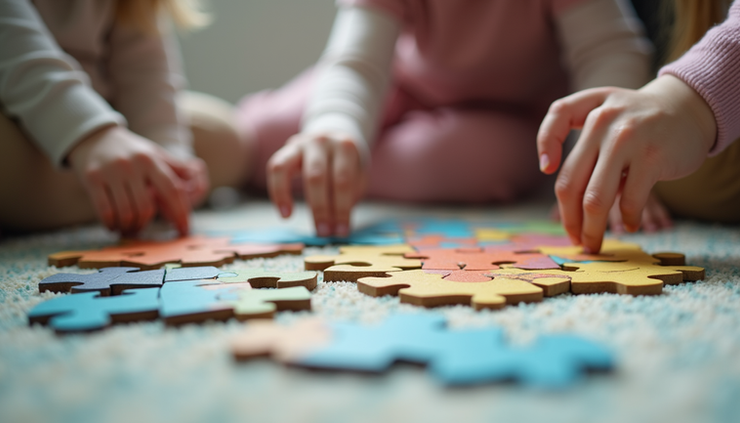
Puzzles are a great way to improve communication and cooperation. When children work together to solve a puzzle, they learn to communicate, coordinate actions and share ideas.
Tips for playing
Choose a puzzle with a picture that interests the child.
Divide the pieces among the participants.
Encourage the children to talk about the pieces and cooperate.
4. Movement games with instructions
Games that involve movement and simple instructions, like "Simon Says" or "Follow the Leader," strengthen language comprehension, attention and responding to instructions.
How to play
Give simple, clear instructions.
Encourage the child to repeat the instructions.
Play at a slow pace to allow understanding.
5. Memory games with pairs
A memory game with matching cards helps develop concentration, memory and verbal communication when talking about the cards that are revealed.
How the game goes
Spread the cards face down.
Each player turns over two cards and tries to find a pair.
Encourage the child to describe the cards they reveal.
6. Building a story together
A game in which each participant adds a sentence to a story encourages creativity, listening and verbal communication. It also helps children learn about sequences of events and expressing emotions.
Example
Start with a simple sentence like "Once upon a time there was a boy who loved to go on trips."
Each player adds one sentence.
You can draw the story together.
7. Sensory games
Games that combine touch, hearing and smell, like "What's in the box?" with different objects, encourage conversation about sensations, descriptions and expressions.
How to play
Put different objects in a box.
The child tries to guess what's in the box by touch.
Talk about how the objects feel and look.
8. Question-and-answer games
A game in which you ask simple questions and encourage the child to answer is great for developing language and understanding questions.
Sample questions
What color is the ball?
Where is the cat?
How do you feel today?
9. Building games with blocks
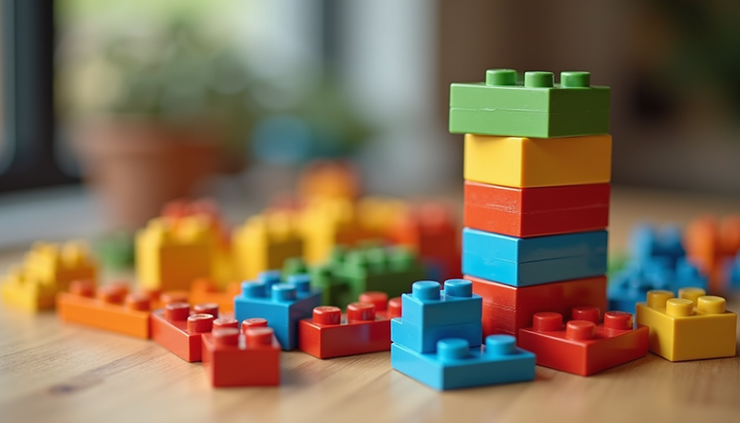
Building games with blocks or Lego allow cooperation, planning and verbal communication when building something together.
Tips
Plan together what to build.
Talk about the steps.
Encourage the child to explain what they're building.
10. Turn-taking games
Games in which each participant waits for their turn, like simple card games or dice games, strengthen patience, listening and communication.
How to play
Explain why taking turns matters.
Encourage the child to wait and speak when it's their turn.
Repeat the rules simply.


Comments